The death of Yves Sakila, a 32-year-old Congolese man, in Dublin city centre has sparked widespread outrage, protests, and urgent calls for accountability in Ireland. On May 15, 2026, Sakila died following an altercation with security guards at the Arnotts department store on Henry Street. Video footage that emerged shortly after the incident appeared to show one guard pulling Sakila’s hood over his face while another pressed a knee into his neck as he was restrained on the ground. After approximately two minutes, Sakila stopped struggling and became motionless.
His death has drawn stark comparisons to the killing of George Floyd in the United States in 2020, igniting discussions about racism, policing practices, and the treatment of vulnerable individuals in Irish society.
The incident occurred shortly after 5pm when security staff at Arnotts detained Sakila. Details surrounding the exact circumstances that led to his restraint remain under investigation, but the visual evidence has shocked many observers. In the footage, Sakila is seen being held down in a manner that has raised serious questions about the proportionality of force used. The parallel to George Floyd’s death, where former Minneapolis police officer Derek Chauvin knelt on Floyd’s neck for over nine minutes, has been explicitly drawn by those closest to Sakila.
David Kaliba, a 35-year-old physics student who attended school with Sakila, spoke to reporters at the scene of mourning. “We call this a George Floyd moment,” he said. “I can’t believe it happened in America in 2020 and happened in Ireland in 2026.” Kaliba’s words captured the sense of disbelief and frustration felt by many in Ireland’s growing African and Congolese communities, who have expressed fears that systemic issues around race and marginalisation may have contributed to the tragedy.
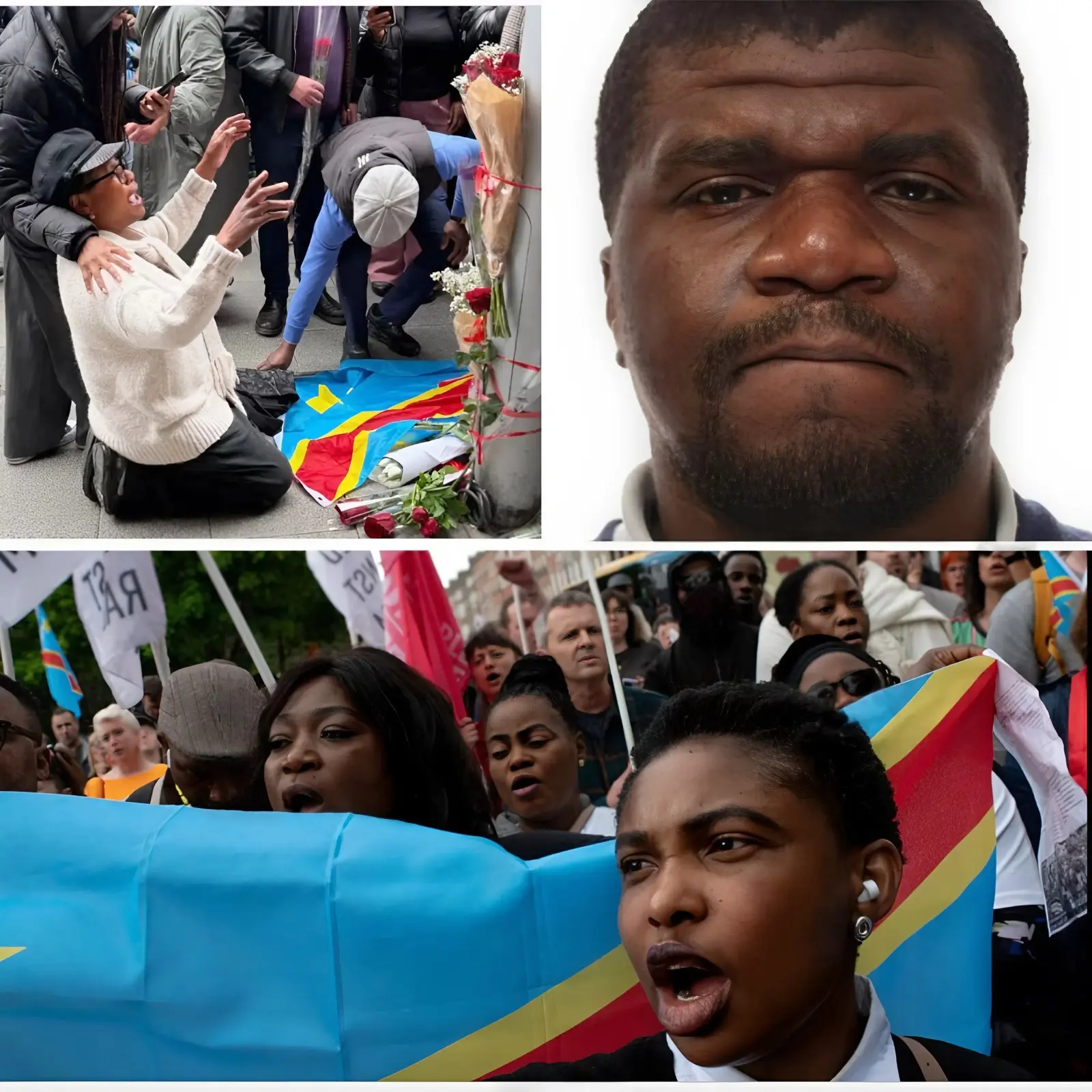
In response to the incident, Black Coalition Ireland organised a significant protest outside the Irish Parliament at Leinster House on Thursday. Hundreds of demonstrators gathered, chanting “justice for Yves, dignity for all” and the familiar protest slogan “no justice, no peace.” The atmosphere was charged with emotion as speakers addressed the crowd, demanding a full, transparent, and independent investigation into Sakila’s death.
Among the prominent voices was Dr Ebun Joseph, Ireland’s special rapporteur on racism and equality. Dr Joseph expressed her “profound shock and grave concern” at the events, describing the incident as one that had caused “significant distress, fear and outrage” within communities. She called for an urgent and thorough investigation, emphasising the need for accountability and systemic change to prevent similar tragedies.
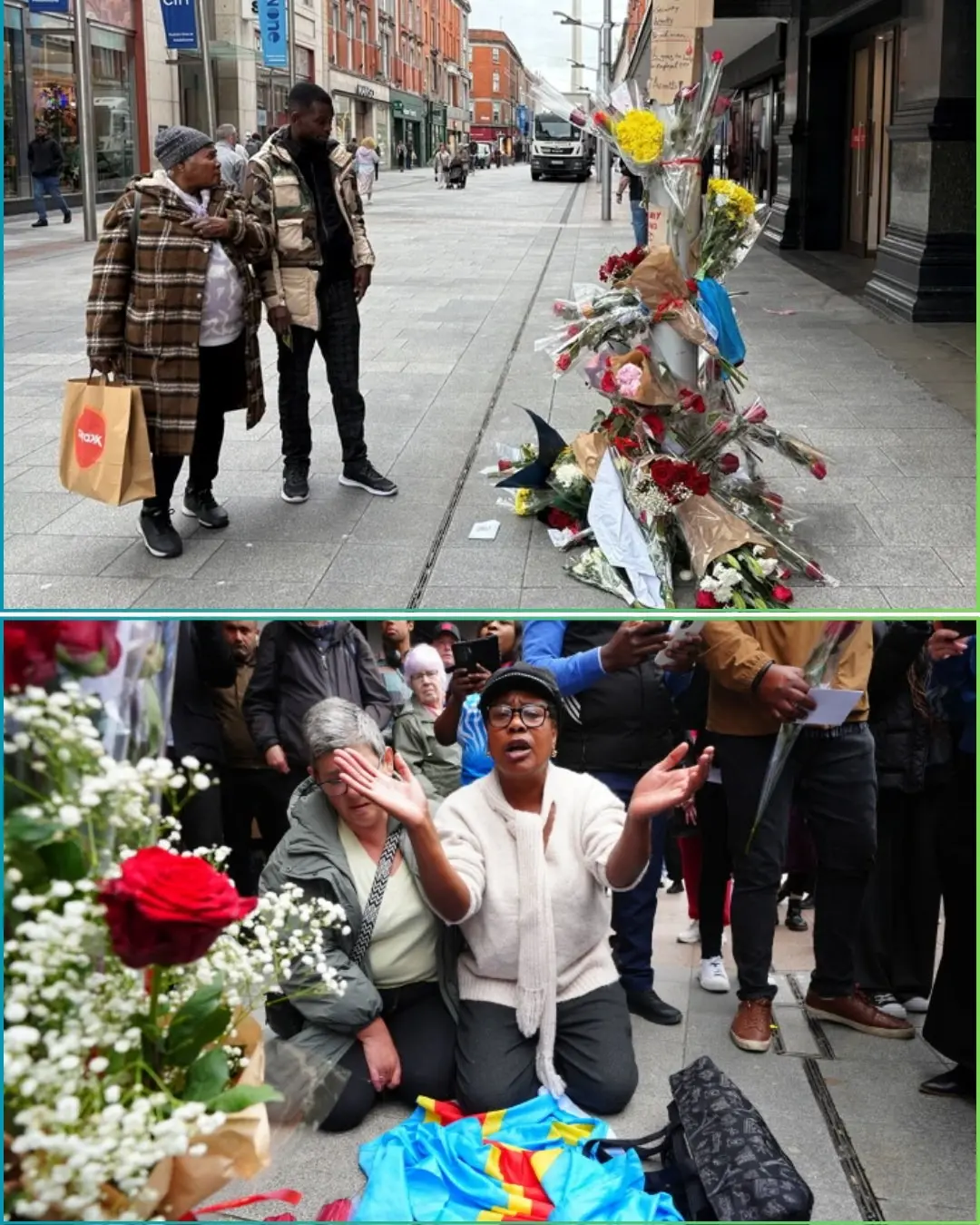
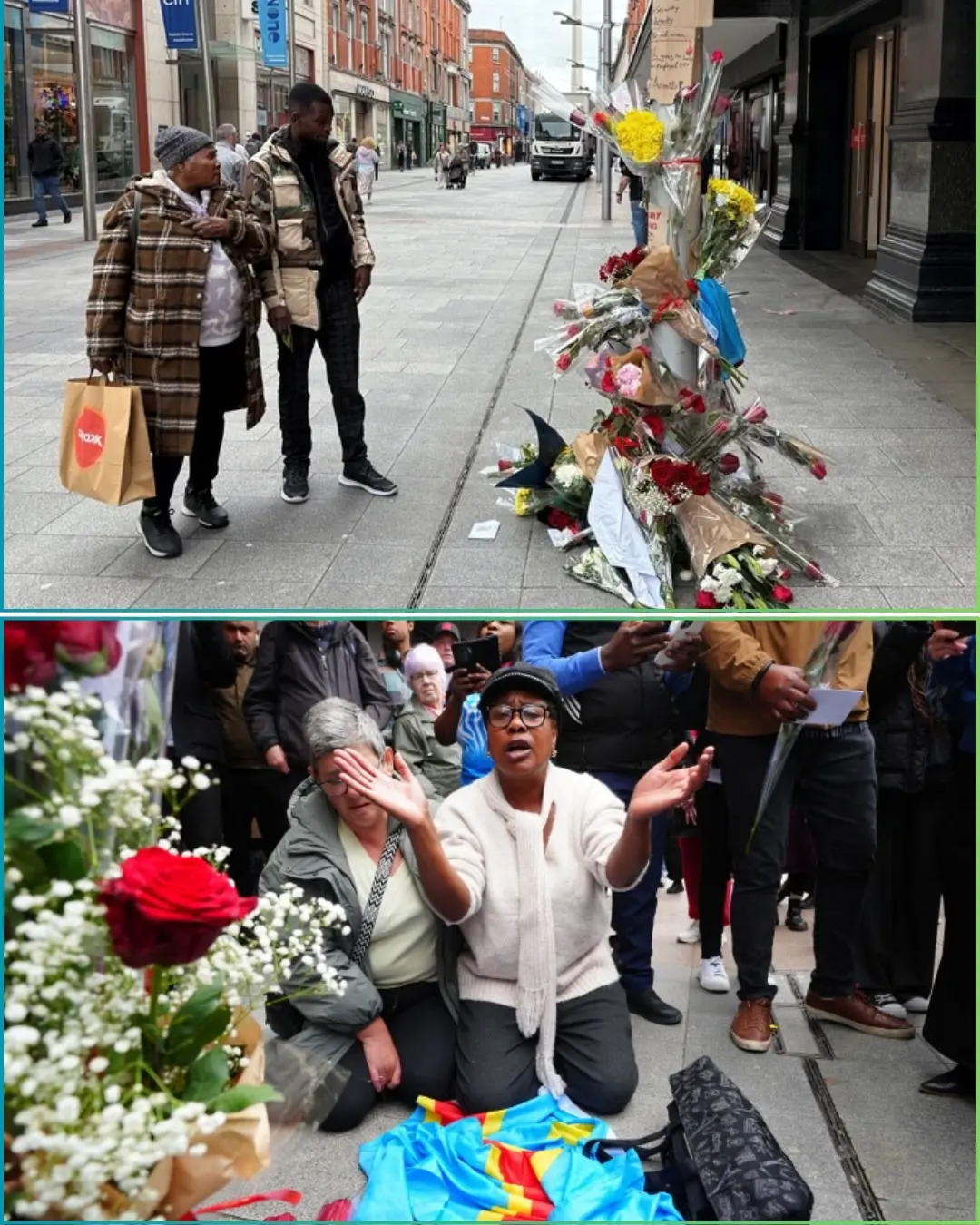
A tribute to Sakila was laid out in front of the Arnotts store, featuring flowers, candles, and signs, including one that read “black lives matter here too.” The display served as a focal point for public grief and solidarity. Friends and community members described Sakila as a man who had faced significant challenges, including homelessness and drug-related issues. At a press conference, a solicitor representing Sakila’s family noted these struggles, suggesting that he had been failed by support systems that should have been in place to help him.
Councillor Yemi Adenuga, the first elected black female public representative in Ireland, echoed these sentiments. She stated that Sakila had been let down by the broader system and should have received more comprehensive support for his personal challenges. Her comments highlighted ongoing debates in Ireland about social services, mental health support, and integration for immigrant communities, particularly those from African nations.
The Irish government has responded to the growing public pressure. Taoiseach Michael Martin expressed his deep concern over the incident during a public statement. “My deepest sympathies go out to his family, and to the wider Congolese community,” he said. “I don’t want to prejudice the outcome of that investigation, but I think a lot of people are clearly very concerned about what has transpired here.” Martin stressed the importance of a thorough and impartial inquiry to establish the facts.
Arnotts, the historic department store where the incident took place, issued a statement expressing that it was “deeply saddened” by Sakila’s death. The company confirmed it was fully cooperating with the Garda Síochána (Irish police) in their investigation. Meanwhile, the Gardaí have confirmed they are continuing to examine all circumstances surrounding the death. A spokesman said: “We are continuing to investigate all of the circumstances surrounding the death of Yves Sakila following an incident on Henry Street, Dublin, on May 15, 2026, shortly after 5pm.”
The post-mortem examination has been completed by the Office of the State Pathologist, though results have not been publicly released for operational reasons. The Garda Síochána Ombudsman Commission (GSOC), known as Fiosru, attended the scene on Friday after the police referred the matter to the watchdog. This step is standard procedure when serious incidents involving potential police or security-related actions occur, but in this case, it underscores the gravity with which authorities are treating the case.
The broader context of Sakila’s life adds layers of complexity to the story. As a member of Ireland’s Congolese diaspora, he represented a community that has grown significantly in recent years. Many within this group have voiced fears that the incident reflects deeper issues of racial profiling, inadequate training for private security personnel, and societal neglect of those experiencing homelessness or addiction. Advocates argue that Ireland, long viewed as a welcoming nation, must confront uncomfortable questions about equality and justice as its population becomes more diverse.
Protesters and community leaders have called not only for justice in Sakila’s case but also for wider reforms. These include better oversight of private security practices in retail environments, improved de-escalation training, mandatory body cameras for guards in certain contexts, and enhanced social supports for vulnerable populations. The comparison to George Floyd has amplified these demands, with many noting that while Ireland does not have the same scale of police violence seen in some other countries, isolated incidents like this can erode public trust if not handled transparently.
As the investigation proceeds, Sakila’s family and friends continue to mourn a man remembered for his potential and his struggles. The tributes left at Arnotts and the ongoing protests serve as reminders that his death has touched a nerve in Irish society. With the Gardaí and independent oversight bodies involved, many hope that the truth will emerge fully and that meaningful lessons will be learned.
The coming weeks are likely to see continued scrutiny of the case. Civil society groups, equality bodies, and political representatives have all signalled their intention to monitor developments closely. For Ireland, a country that prides itself on its progressive values and history of welcoming newcomers, the death of Yves Sakila poses a critical test of its commitment to dignity and justice for all residents, regardless of background.
Community leaders have urged calm while investigations take their course, but they also stress that patience should not mean complacency. The chants heard outside Parliament – “justice for Yves” – reflect not just grief for one man but a collective demand for a fairer society. Whether this moment leads to substantive change remains to be seen, but the widespread attention it has received suggests that Sakila’s death will not be easily forgotten.