BREAKING NEWS: Karoline Leavitt officially announced that passports must match the sex assigned at birth, not personal identity, sparking outrage, applause, and a wave of online protests questioning where society draws the line between faith and biology.
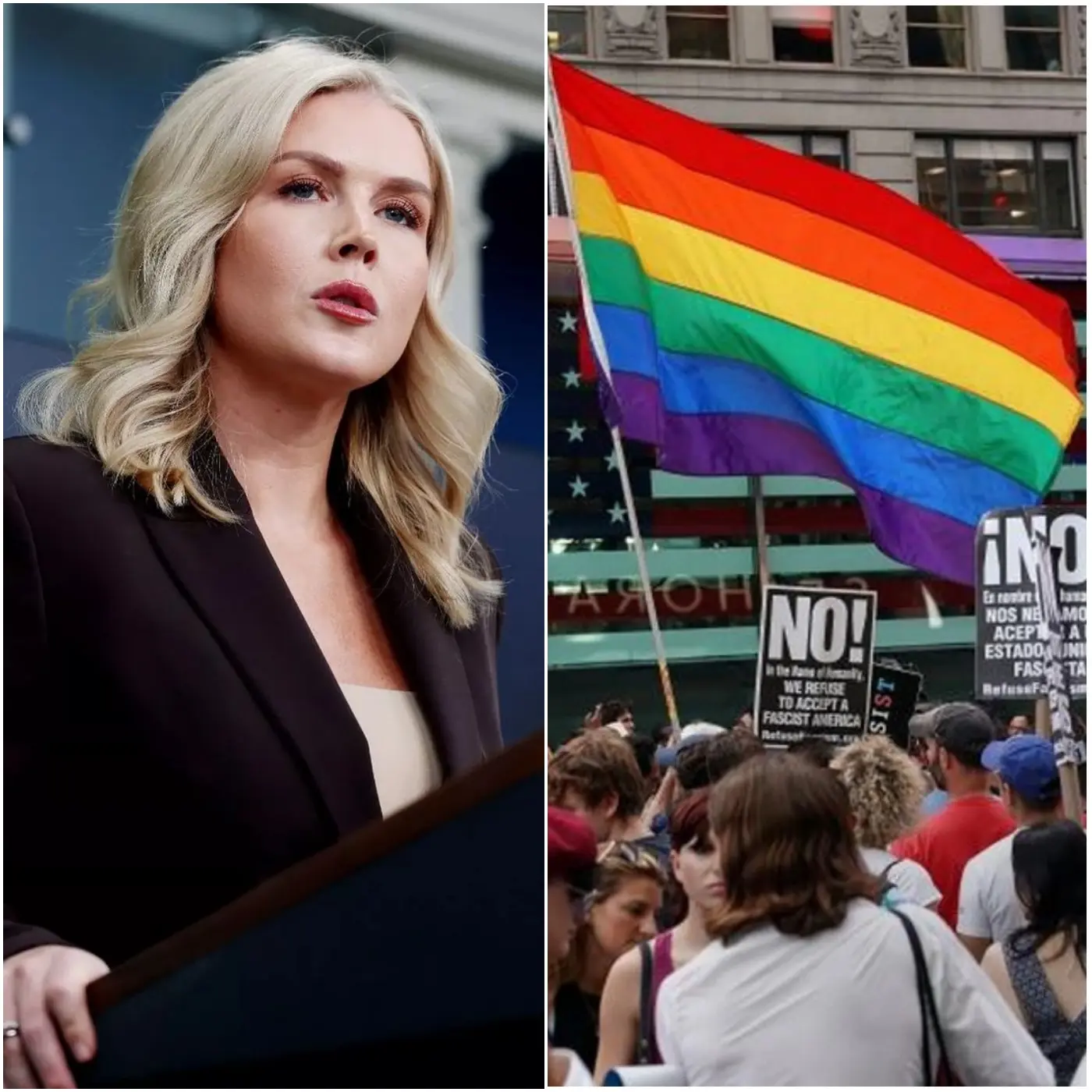
In a move that has intensified the ongoing national debate over gender, identity, and government policy, White House Press Secretary Karoline Leavitt has confirmed that U.S. passports will now be required to reflect an individual’s sex assigned at birth rather than their self-identified gender. The announcement, tied to President Donald Trump’s executive order issued early in his second term, eliminates options for transgender and non-binary individuals to select markers that align with their gender identity, including the previously available “X” designation for non-binary applicants.
The policy stems from Executive Order 14168, titled “Defending Women From Gender Ideology Extremism and Restoring Biological Truth to the Federal Government.” Signed on the first day of Trump’s return to office in January 2025, the order directs federal agencies, including the State Department and Department of Homeland Security, to recognize only two sexes—male and female—defined as immutable and determined at conception or birth. It explicitly prohibits the issuance of federal identity documents, such as passports, visas, and Global Entry cards, that conflict with this binary definition.
Leavitt, speaking to reporters and outlets like NOTUS, emphasized that the change restores what she described as “biological truth” and aligns with the administration’s view that sex is a fixed, God-given reality decided at birth.
Leavitt clarified that the policy is not retroactive. Existing passports, including those issued to transgender and non-binary individuals with gender markers matching their identity or an “X,” remain valid until expiration. However, upon renewal or new applications, applicants must designate their sex based on birth records. “They can still apply to renew their passport—they just have to use their God-given sex, which was decided at birth,” Leavitt stated. “Thanks to President Trump, it is now the official policy of the federal government that there are only two sexes—male and female.”
The shift reverses policies from previous administrations, particularly the Biden era, which had expanded options for gender self-identification on federal documents. The State Department, under Secretary Marco Rubio, suspended applications seeking gender changes or neutral markers shortly after the executive order, prompting immediate legal and public backlash.
Reactions have been sharply divided. Supporters, including conservative groups and many Trump allies, have applauded the move as a return to common sense and biological reality. They argue that identity documents should reflect verifiable physical facts rather than subjective personal feelings, preventing potential fraud, confusion in international travel, or inconsistencies in single-sex spaces. Online, hashtags celebrating the policy as a win for “sanity” and “women’s rights” trended, with users praising the administration for resisting what they call “gender ideology.”
On the other side, LGBTQ+ advocacy organizations, civil rights groups like the American Civil Liberties Union (ACLU), and transgender individuals have condemned the policy as discriminatory and harmful. Critics point out that passports serve as essential identification not only for international travel but also for domestic purposes such as employment, housing, banking, and accessing benefits. Forcing a mismatch between a person’s lived gender and their official documents can lead to outing individuals involuntarily, increasing risks of harassment, discrimination, or violence—especially when traveling abroad in less tolerant countries.
Several transgender Americans have filed lawsuits challenging the policy, arguing it violates constitutional protections against sex discrimination, infringes on privacy rights, and restricts freedom of expression. In one case, plaintiffs described the emotional toll of receiving passports that contradict their identity, with one individual stating it felt like being “rendered void” by the government. Advocates warn that the change could deter travel altogether for some, isolating them from family or opportunities overseas.
The policy has also faced judicial scrutiny. Early challenges resulted in temporary restraining orders blocking certain aspects, though the Supreme Court in November 2025 lifted a block, allowing the administration to proceed with requiring sex designations based on birth. The ruling was hailed by the White House as a victory for biological truth, while opponents decried it as enabling discrimination.
The controversy extends beyond legal and political spheres into broader cultural questions. Protests have erupted online and in public, with demonstrators questioning where society draws the line between religious or faith-based views on biology—often framing sex as binary and divinely ordained—and modern understandings of gender as a spectrum influenced by personal identity, medical science, and lived experience. Social media platforms have seen waves of outrage, with users sharing stories of transition journeys and fears of regression, contrasted by posts defending the policy as protecting women’s sports, prisons, and shelters from perceived intrusions.
Medical organizations, including major associations like the American Medical Association, have long supported gender-affirming care and recognition of gender identity, viewing transgender experiences as valid and deserving of accommodation. Critics of the policy argue it dismisses this consensus, treating gender diversity as an “ideology” rather than a reality backed by decades of research.
As the policy takes effect, thousands of passport renewals could be affected in the coming years. Transgender and non-binary applicants now face a binary choice: comply with the birth-sex designation or forgo renewal, potentially limiting their mobility and participation in civic life. The administration maintains that the measure promotes clarity and fairness, while opponents see it as part of a wider rollback of transgender rights, including restrictions on gender-affirming care and access to facilities.
This development underscores the deep divisions in American society over gender, biology, and the role of government in recognizing personal identity. As debates rage in courtrooms, online forums, and living rooms, the passport policy stands as a flashpoint in the larger culture war, forcing a reckoning with fundamental questions about truth, rights, and who gets to define reality in official documents.