London — A sensational claim that Westminster “descended into chaos” after a politician allegedly demanded the mass deportation of Muslims has ricocheted across social media in recent days, fuelling outrage, counter-outrage, and a fresh round of scrutiny over the UK’s already combustible immigration debate. But while the slogan-like phrasing is spreading fast online, the story’s details are muddled — and key parts appear to be either misattributed or unverified.
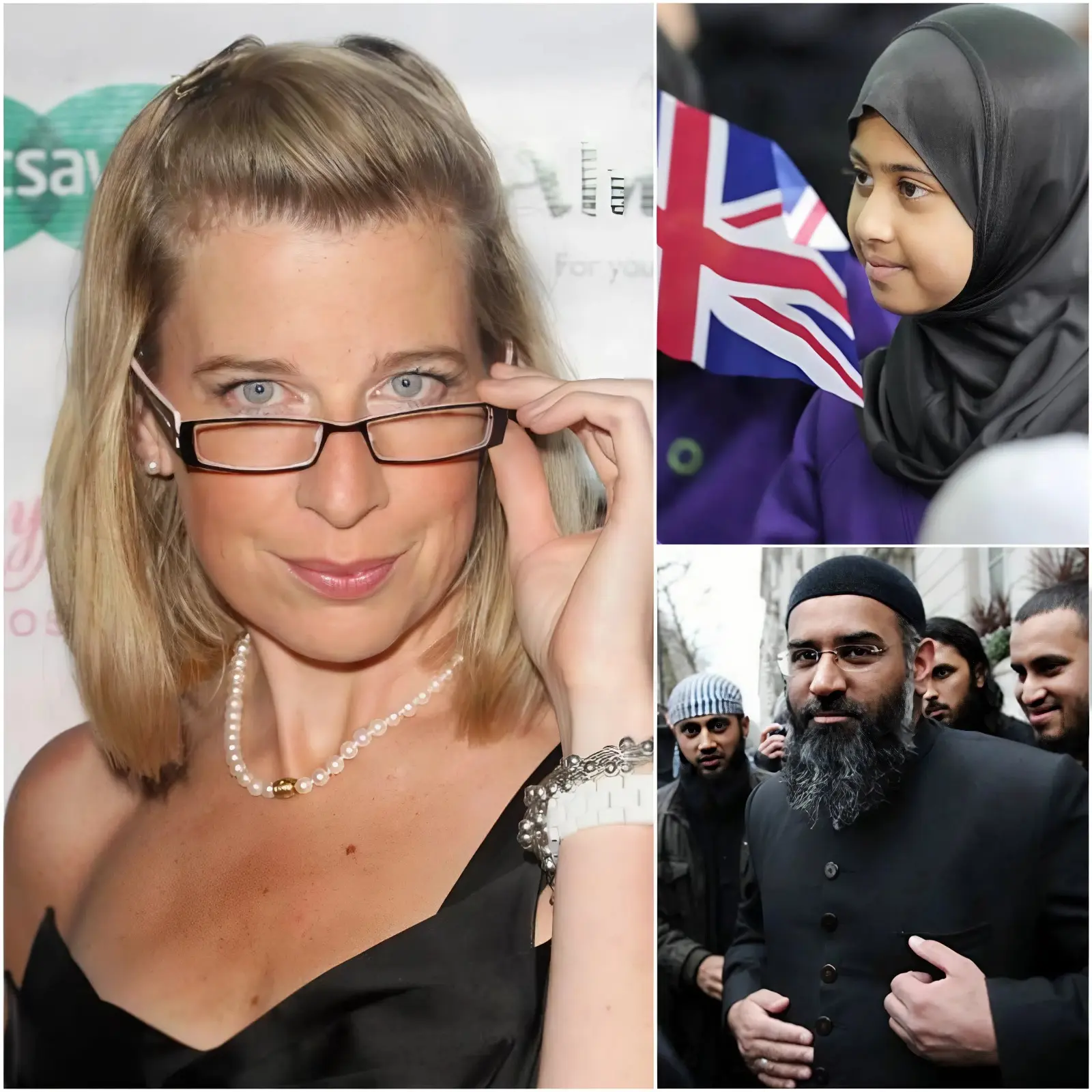
Posts shared widely on platforms including Facebook and X describe a dramatic confrontation in Parliament supposedly sparked by “explosive remarks” about deporting all Muslims, with some versions naming media personality Katie Hopkins as the figure at the centre of the row. Yet available public records do not support the claim that Hopkins is a sitting MP or that she made such remarks from the floor of the House of Commons.
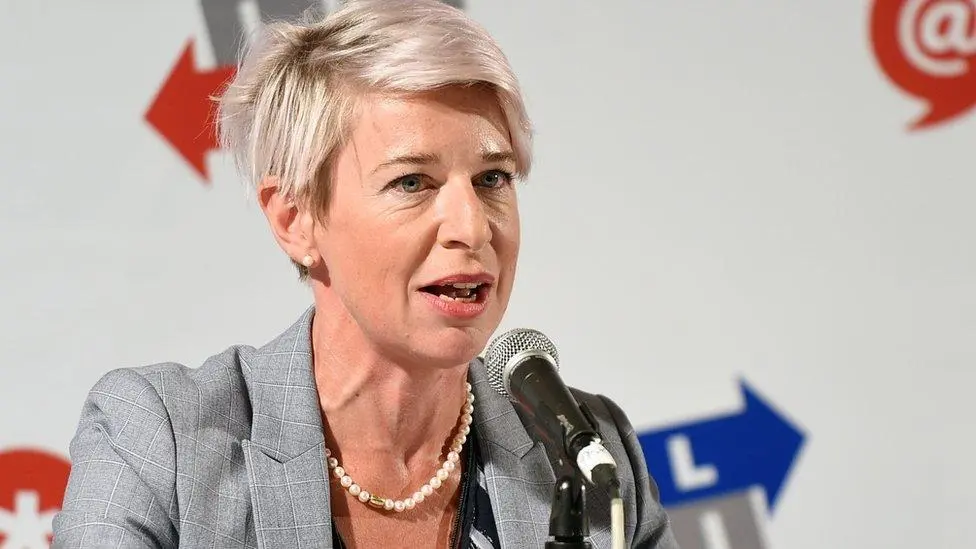
Hopkins is best known as a far-right political commentator and media figure, not as a member of Parliament. The online posts’ wording also varies from one share to the next, with some versions replacing Hopkins’s name with that of Rupert Lowe, an independent MP for Great Yarmouth who previously sat with Reform UK before a high-profile rupture.
The most incendiary line — a call to deport Muslims as a group — is the claim that is driving the online firestorm. Yet in official parliamentary transcripts that are publicly accessible, there is no clear evidence of such a phrase being delivered as a formal statement in the Commons in the way social media posts imply.
What is on the record is that immigration enforcement and deportation have featured prominently in recent Commons exchanges, including heated arguments about legal constraints, appeals, and the European Convention on Human Rights (ECHR). In one high-profile session of topical Home Office questions on 9 February 2026, the debate included calls for “radical action” and proposals to leave the ECHR to enable rapid deportations of people who arrive irregularly — language that underscores the intensity of the current political mood even without the viral claim’s alleged wording.
During the same session, the Speaker intervened to tell MPs that shouting “does not look good on TV,” a reminder of how quickly immigration debates can turn performative — and how easily clips, fragments, or paraphrases can be spun into viral narratives outside the chamber.
Even if the specific “deport all Muslims” claim remains unproven as a parliamentary moment, its viral traction is not happening in a vacuum. Immigration has become one of the defining political fault lines of the mid-2020s, with arguments ranging from small-boat crossings and asylum accommodation to the role of courts and human-rights frameworks in deportation cases.
Reform UK, in particular, has repeatedly attempted to position itself as the party of hardline border control. Its leadership has argued for leaving the ECHR as part of a broader push to make removals easier — a stance that has drawn both support and fierce condemnation. High-profile defections and internal splits have kept the right flank of British politics in constant motion, adding more oxygen to online narratives that frame immigration clashes as existential national showdowns.
Meanwhile, the boundary between “deport illegal migrants” messaging and rhetoric that targets Muslims as a religious group has been a recurring controversy in UK politics — including in reporting about candidates and activists. In 2024, The Guardian reported that Reform UK dropped candidates after racist social-media posts, including comments suggesting Muslims “should be deported” or that “the only solution” was to “remove the Muslims from our territory.” That history makes it easier for a new, dramatic-sounding claim to feel plausible to many readers — and harder to dislodge once it spreads.
The real stakes: policy, community safety, and political temperature.The deeper issue is not just whether a particular viral quote was said verbatim in Parliament — it’s how Britain’s political conversation is increasingly shaped by maximalist claims and identity-based provocation.
A proposal to deport Muslims as Muslims would be widely viewed as discriminatory and incompatible with basic equalities principles and longstanding protections for freedom of religion. It would also risk inflaming community tensions and increasing the threat of harassment or violence against British Muslims, who are citizens, taxpayers, and public servants across the country. At the same time, public frustration about irregular migration, enforcement capacity, and asylum backlogs is genuine — and politicians across multiple parties are under pressure to demonstrate control, competence, and speed.
That is the volatile mix in which a phrase like the one going viral can become a political accelerant: supporters may frame it as “raw frustration,” while critics see it as dangerous incitement. The result is a feedback loop where outrage drives reach, reach drives more extreme framing, and the centre of gravity of debate shifts further toward confrontation.
Right now, the most responsible reading is this: social media posts are promoting a dramatic account of a Commons eruption tied to a call to deport Muslims, but the key details — including who said what, and whether it was said in Parliament at all — are not reliably substantiated in the way the viral narrative suggests. What is clearly documented is that UK immigration debates in Westminster have become increasingly heated, with arguments over deportation, legal constraints, and the ECHR regularly spilling into public fury and online amplification.