I AM A WOMAN — AND I AM DEEPLY OFFENDED AT BEING FORCED TO TAKE A SEX TEST.
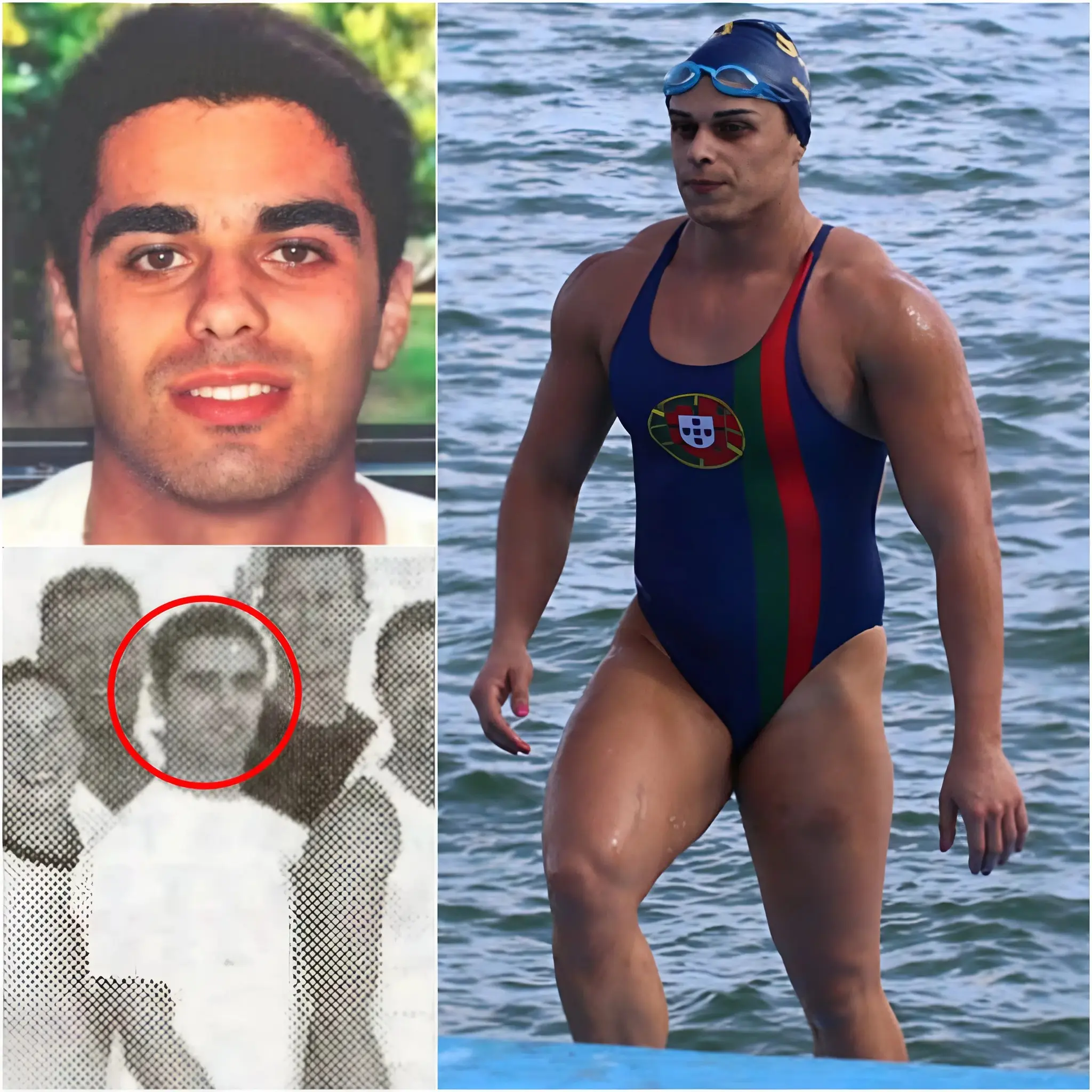
Hannah Caldas, the accomplished Masters swimmer at the center of a recent controversy, has spoken out forcefully following her five-year suspension by World Aquatics, the international governing body for swimming (formerly known as FINA, the International Swimming Federation). The 48-year-old athlete, who has competed for decades and achieved notable success in the women’s category, described the organization’s demand for a chromosomal sex test as invasive, unnecessary, and profoundly offensive to her identity as a woman.
The suspension, announced in October 2025 and effective from October 18, 2025, to October 18, 2030, stems from an investigation by World Aquatics’ Aquatics Integrity Unit (AQIU). It cites violations of the organization’s Integrity Code, its Policy on Eligibility for the Men’s and Women’s Competition Categories, and related operational requirements. As a result, all of Caldas’ competitive results from June 2022 through October 2024 have been disqualified, including performances at the 2024 World Aquatics Masters Championships in Doha, Qatar, where she excelled in events such as the 100-meter freestyle.
Caldas’ case highlights the ongoing tensions surrounding gender eligibility policies in sports, particularly in Masters divisions intended for older-adult recreational competitors. World Aquatics requires compliance with its Gender Policy, which includes chromosomal criteria for participation in women’s events. Despite providing documentation—including a birth certificate identifying her as female—Caldas was required to undergo a genetic or chromosomal test at her own expense to verify eligibility.
In a statement released through New York Aquatics, Caldas expressed deep frustration with the requirement. She emphasized that such tests are not only costly but also medically unnecessary, a view supported by her insurance provider, which declined coverage for the procedure. “Chromosomal tests are invasive and expensive procedures,” Caldas stated. “My insurance refuses to cover such a test because it is not medically necessary. No U.S. state requires genetic tests for recreational sports events like these. Not even US Masters Swimming, the national governing body for recreational adult swimming in the US, demands this for any of its events.”
The controversy surrounding Caldas intensified earlier in 2025 when she dominated the women’s 45-49 age group at the U.S. Masters Swimming Spring National Championships in San Antonio, Texas, securing five individual gold medals in events including the 50- and 100-yard breaststroke, freestyle races, and the 100-yard individual medley. Her victories drew scrutiny and complaints from some competitors, reigniting debates about fairness in women’s categories amid broader discussions on transgender participation in sports.
Caldas, who has a long history in competitive swimming, previously swam in the men’s division at U.S. Masters events from 2002 to 2004 before transitioning and competing as a woman. She has also represented Portugal internationally, narrowly missing qualification for the 2012 London Olympics. U.S. Masters Swimming conducted its own review and concluded that her submitted documents demonstrated she was assigned female at birth and identifies as female, affirming her eligibility under their standards.
Despite this, World Aquatics pursued its investigation, leading to the demand for chromosomal testing. Caldas’ refusal to comply—on grounds of privacy, cost, and principle—resulted in the sanction. She has accepted the punishment without appeal and indicated she has no intention of competing in World Aquatics-sanctioned events in the future.
In her response to media inquiries, Caldas defended her achievements and her right to privacy. “My medals, my achievements—come from hard work and dedication, nothing else,” she asserted. She rejected suggestions that her physique or performance stemmed from anything other than rigorous training over many years. “My muscles are the result of training, there’s nothing to argue about,” she added, pushing back against speculation about her body in the context of the eligibility dispute.
Caldas framed her decision to refuse the test as a stand for personal dignity and broader principles. “I am a woman—and I am deeply offended at being forced to take a sex test,” she declared. She argued that submitting to such invasive scrutiny would compromise her most intimate medical information without justification, especially in a recreational Masters context where participants compete for personal fulfillment rather than professional stakes.
“But if a five-year suspension is the price I must pay to protect my most intimate medical information, then it’s a price I am happy to pay—for myself, and for every other woman who does not want to submit to highly invasive medical testing just to swim in an older-adult competition,” Caldas continued. Her words underscore a growing concern among some athletes and advocates that gender verification policies can disproportionately burden women—cisgender and transgender alike—by mandating unnecessary medical interventions.
The case has sparked wider debate about the balance between inclusion, fairness, and privacy in sports governance. World Aquatics maintains that its policies are necessary to ensure equitable competition, particularly following its 2022 decision to restrict transgender women’s participation in elite women’s events based on puberty-related criteria. Masters competitions, while recreational, fall under similar eligibility frameworks for international events.
For Caldas, the suspension effectively ends her involvement in World Aquatics-affiliated Masters swimming. She has expressed acceptance of this outcome, choosing to prioritize her principles over continued participation under the current rules. Her story serves as a poignant example of the personal toll exacted by evolving policies in a sport long celebrated for its inclusivity at the grassroots level.
As discussions on gender and athletics continue globally, Caldas’ outspoken response reminds observers that behind policy debates are real individuals whose identities, careers, and sense of fairness are profoundly affected. Her insistence on hard-earned success and her refusal to undergo what she views as unwarranted scrutiny reflect a commitment to dignity in the face of institutional pressure.