EXTREMELY SENSITIVE CONTENT: FOR ADULTS ONLY (18+)
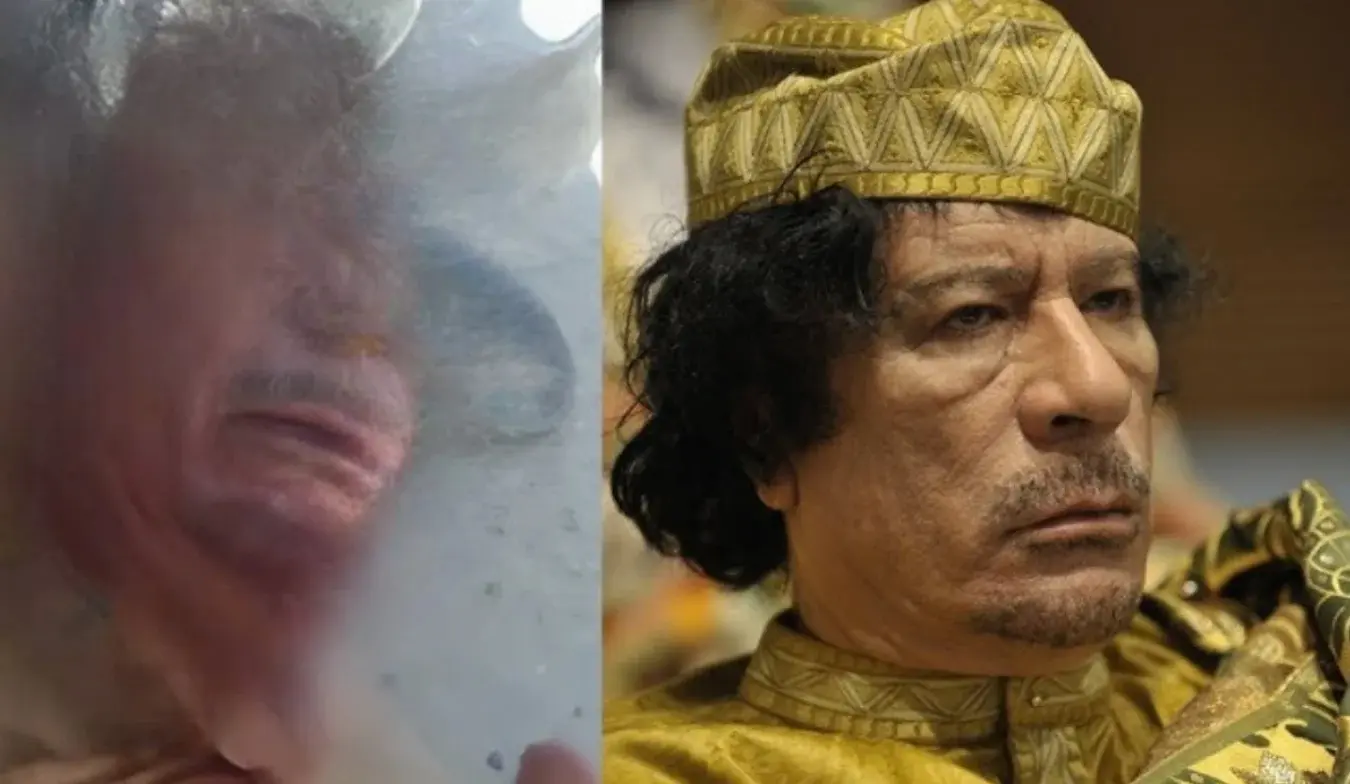
This article analyzes an extremely sensitive historical event: the fall, capture, extrajudicial execution, and disposal of the remains of Muammar Gaddafi (Colonel Gaddafi), leader of Libya from 1969 to 2011. The content is intended solely for educational and historical purposes, to provide a better understanding of the final days of the Gaddafi regime, the context of the 2011 Libyan Revolution, and issues related to transitional justice, political violence, and the handling of the remains of dictatorial leaders. It is not intended to cause gratuitous shock, glorify violence, or promote acts of revenge.
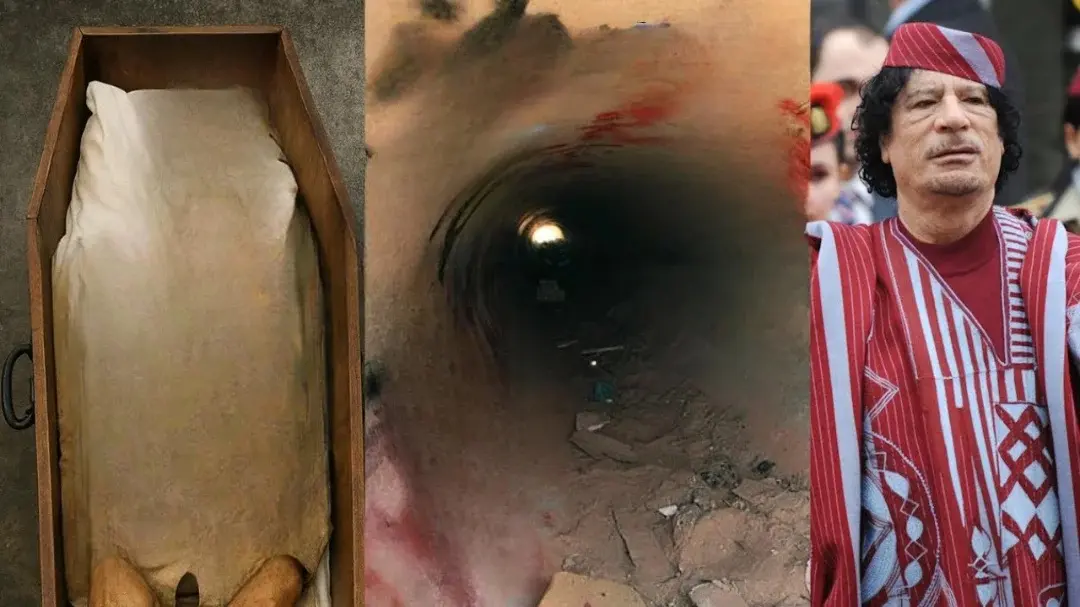
The secret burial of Colonel Gaddafi – The Libyan dictator: the truth about his death, his remains, and his hidden grave
Muammar Gaddafi (1942–2011) ruled Libya for over 42 years under a personal dictatorship that combined Arab socialism, populism, and political repression. Many saw him as a symbol of brutality and corruption, inflicting suffering on tens of thousands through repression, enforced disappearances, and the sponsorship of international terrorism. When the Arab Spring reached Libya in 2011, Gaddafi faced a nationwide uprising. On October 20, 2011, after being pursued by forces of the National Transitional Council (NTC) and Misrata fighters, Gaddafi was captured alive in Sirte.
Minutes later, he was extrajudicially executed by gunfire and stabbing. His body was taken to Misrata, publicly displayed in a refrigerated chamber for several days, and then secretly buried in the early hours of October 25, 2011, in an undisclosed location. As of 2026, the exact location of Gaddafi’s grave remains a state secret and has never been officially exhumed.
The final moments: from capture to execution (October 20, 2011)
After the fall of Tripoli in August 2011, Gaddafi retreated to his hometown of Sirte. On October 20, his convoy was attacked by NATO aircraft, after which he was cornered by NTC forces and Misrata rebels in a drainage pipe. Gaddafi was captured alive, his face covered in blood and his clothes torn, but he was still conscious and able to speak.
Images captured by the rebels showed:
Gaddafi was dragged, beaten, bayoneted, and shot in the head, chest, and abdomen.
The time elapsed from his capture to his death was estimated at only 10 to 30 minutes.
His body was placed in a truck and transported to Misrata.
Public display of the remains (October 21-24, 2011)
The bodies of Gaddafi and his son, Mutassim, were placed in a commercial refrigerated chamber in Misrata. Thousands of citizens lined up for days to view the remains, a scene that sparked international controversy.
Gaddafi’s body had multiple bullet wounds to the head and chest, with dried blood on his face and matted hair.
Mutassim was seen with gunshot wounds to his neck and chest.
Videos and photographs circulated around the world, prompting condemnation from the United Nations and Human Rights Watch, who considered them violations of humanitarian law and international protocols that prohibit the desecration of human remains.
The Secret Burial (Dawn of October 25, 2011)
Following international pressure and fears that a grave could be desecrated or become a shrine for loyalists, the NTC decided to hold a secret burial. According to accounts from participants recorded by the Libyan and international press:
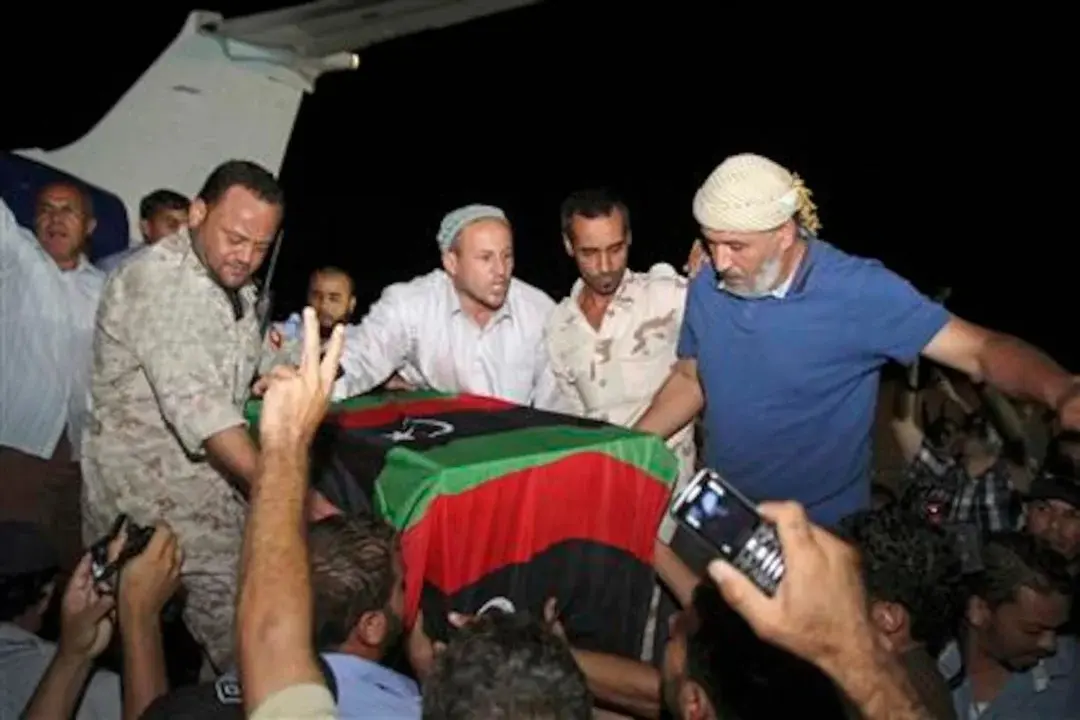
In the early hours of October 25, the bodies of Gaddafi, Mutassim and a third individual (former Defense Minister Abu Bakr Younis) were driven by truck to a secret rural area outside Misrata.
They were buried in a shallow, anonymous grave with no identifying marks.
The exact location was kept secret by a small group of Misrata fighters. No public maps exist, no photographs were taken of the grave, and the family was not notified of the coordinates.
To this day, the Libyan government and the Gaddafi family have not revealed the burial site. Some sources suggest the grave is located in the desert regions near Misrata, but there is no independent confirmation.
Without official exhumation
Unlike other cases (such as those of Saddam Hussein or Mussolini), Gaddafi’s coffin or tomb has never been officially opened since his burial. There are no credible reports of exhumation or re-examination of the remains. The Gaddafi family (specifically his son, Saif al-Islam) has repeatedly requested the return of the body for a proper Islamic burial, but Libyan authorities have refused due to concerns about political stability and security.
Historical significance and lessons
The extrajudicial execution, public display, and secret burial of Gaddafi reflect the chaos and vengeance that followed 42 years of autocratic rule. It also raises questions about transitional justice: whether the immediate execution and mistreatment of remains truly bring reconciliation, or simply deepen the divisions within post-Gaddafi Libyan society. Gaddafi’s death and the fate of his remains continue to symbolize the violent collapse of Middle Eastern dictatorships during the Arab Spring.
Muammar Gaddafi was captured alive and extrajudicially executed minutes later, on October 20, 2011. His body was publicly displayed in Misrata before being secretly buried in the early hours of October 25, 2011, in a location that has never been officially revealed. No coffin or grave has been publicly opened since, and the burial site remains a state secret. This event not only brought an end to Gaddafi’s 42-year rule but also constitutes one of the most striking and controversial images of the Arab Spring.
Sources:
Human Rights Watch and Amnesty International: Reports on the death and handling of Gaddafi’s remains (2011-2012).
BBC, Al Jazeera, The Guardian , The New York Times : Contemporary Reporting and Video Evidence (October 20-25, 2011).
Libyan Herald and Libyan sources after 2011: Information about the secret burial.
United Nations Human Rights Council: Report of Inquiry into the Gaddafi Incident (2012).
Archives of the NTC (Libyan National Transitional Council) and accounts from witnesses in Misrata.