Independent investigative journalist and YouTuber Nick Shirley recently drew significant attention with a street confrontation directed at Representative Jamie Raskin, a prominent Democrat from Maryland. In a video that quickly circulated online, Shirley pressed Raskin about claims that the congressman’s net worth had surged by $30 million in under two years. Shirley described the alleged increase as inexplicable and demanded greater transparency, including forensic audits of congressional finances. He argued that such rapid wealth accumulation, combined with any reluctance to submit to independent scrutiny, warranted serious examination—potentially even by a grand jury.
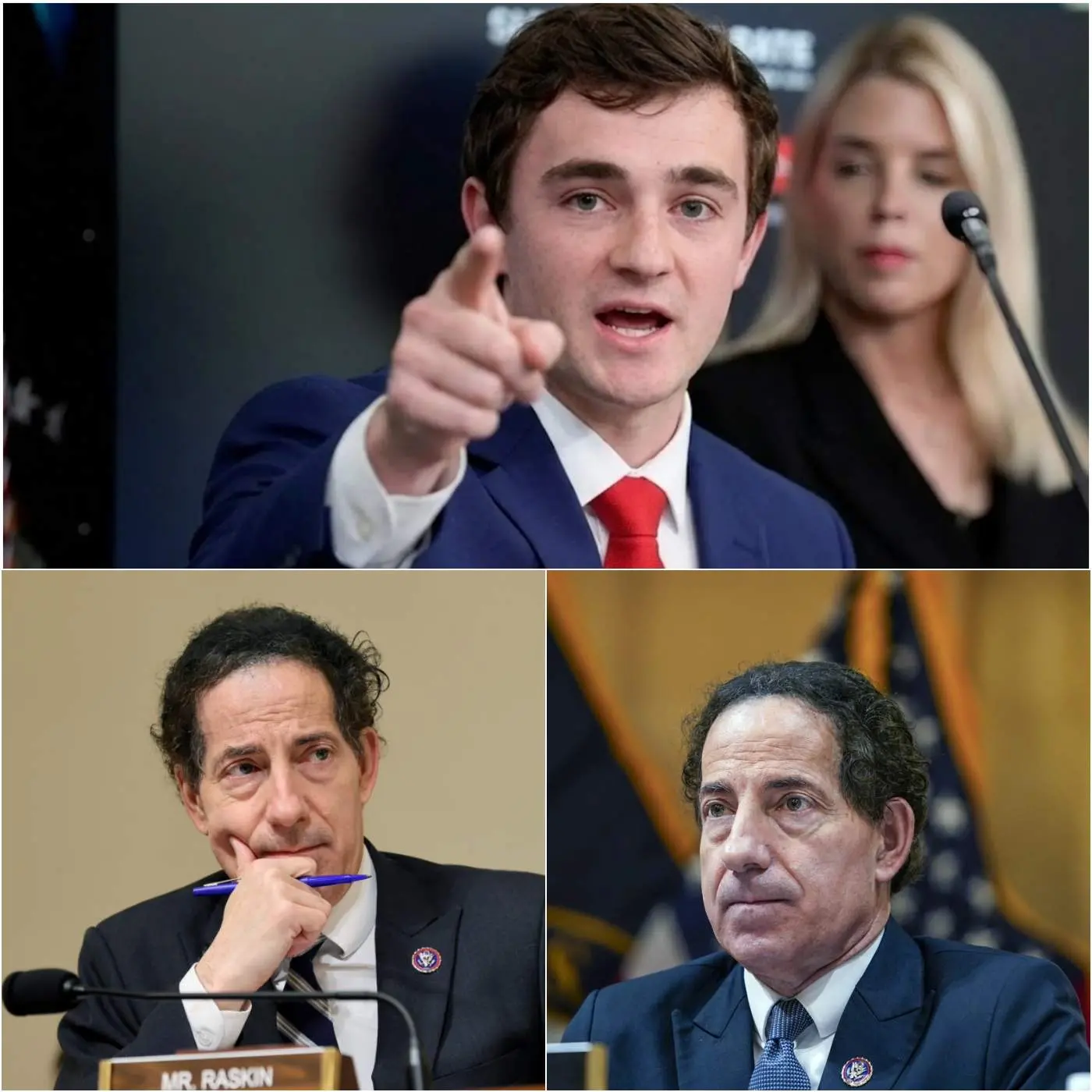
Shirley, who has built a following through his investigative content on platforms like YouTube, positioned himself as an advocate for accountability in public office. In the footage, he emphasized that substantial sums of money do not materialize without traceable sources. “This kind of money doesn’t just appear out of nowhere,” he stated repeatedly, framing the issue as one of public trust. He highlighted Raskin’s alleged resistance to calls for mandatory or regular forensic audits for members of Congress, suggesting this pattern of behavior raised red flags.

Supporters of Shirley viewed the encounter as a bold stand against perceived elite privilege and lack of oversight, praising him for holding powerful figures to the same standards applied to ordinary citizens. Critics, however, dismissed the video as partisan sensationalism or “political drama,” arguing it relied on unverified claims rather than documented evidence.

The core allegation centers on a purported $30 million jump in Raskin’s personal wealth over a short period. Such a figure, if accurate, would represent a dramatic shift for a sitting member of Congress whose official salary is $174,000 per year. Public financial disclosure requirements for members of Congress provide some insight into assets, liabilities, and income sources, but these filings use broad value ranges and do not always capture every detail in real time.
Reliable estimates from sources tracking congressional finances place Raskin’s net worth in the range of approximately $5 million to $6.6 million in recent years, incorporating investments in mutual funds, exchange-traded funds, pensions, bank accounts, and other holdings. For instance, tracking platforms have reported figures around $4.9 million to $6 million during 2025, with fluctuations tied to market performance, including occasional losses in publicly traded assets.
These estimates draw from mandatory disclosures filed with the House of Representatives and analyzed by organizations monitoring political finances. Earlier records, such as those from 2018, showed an estimated net worth around $4 million, reflecting steady but not explosive growth over time. Raskin’s assets have historically included diversified investments like retirement plans, securities, and possibly real estate or other holdings accumulated from his pre-Congress career as a law professor, attorney, and author. He has also benefited from book royalties, speaking fees, and campaign-related activities, though campaign funds are separate from personal wealth and subject to strict regulations.
No credible, independent financial reporting or official investigation has substantiated a $30 million increase in Raskin’s net worth during the timeframe referenced in Shirley’s video. The claim appears to have originated and proliferated primarily through social media posts, shared videos, and viral commentary on platforms like Facebook, X, and Threads. Identical or near-identical phrasing has appeared across multiple accounts, often linking to sites or pages promoting conservative or anti-establishment narratives. Similar posts have substituted other figures—such as Jeanine Pirro or Senator John Kennedy—for Shirley, suggesting a pattern of templated or amplified content designed to generate outrage and engagement.
Shirley himself gained prominence through other investigative work, particularly a viral video series alleging widespread fraud in Minnesota’s childcare programs involving federal funds. That content, posted in late 2025, reportedly uncovered significant improper payments and contributed to policy responses, including temporary halts in certain funding streams. His efforts earned recognition in congressional hearings, where he testified before the House Judiciary Committee on fraud and abuse of taxpayer dollars. Legislation even emerged proposing a Congressional Gold Medal in his honor for exposing waste. This background has lent him credibility among supporters who see him as a citizen journalist challenging institutional corruption.
In the context of the Raskin confrontation, Shirley extended his scrutiny to congressional ethics and transparency. He advocated for mandatory annual forensic audits of members’ finances to prevent conflicts of interest or illicit enrichment. Such proposals are not new; periodic calls for stricter oversight arise across party lines, especially amid broader debates about insider trading, stock ownership by lawmakers, and the revolving door between public service and private gain. Raskin, as a vocal member of the House Judiciary Committee and a frequent commentator on constitutional and ethical issues, has been a target in partisan exchanges.
However, his public disclosures show no evidence of the extreme wealth spike alleged.
The encounter raises larger questions about political accountability, the role of citizen journalists in public discourse, and the spread of unverified claims in the digital age. Viral videos can spotlight legitimate concerns, but they can also amplify misinformation if not grounded in verifiable facts. In this case, the $30 million figure does not align with available financial data, which consistently shows Raskin’s wealth in the single-digit millions, influenced by long-term investments and professional earnings rather than sudden windfalls.
Raskin has not publicly responded in detail to Shirley’s specific ambush-style questioning, though he has addressed broader accusations of impropriety in other contexts by pointing to compliance with disclosure rules and emphasizing ethical standards. Congressional members face regular scrutiny through ethics committees, campaign finance reports, and public filings, mechanisms intended to promote transparency.
Shirley’s insistence on “letting the truth speak” underscores a common refrain in such controversies: if no wrongdoing exists, formal review should exonerate the individual. Yet without concrete evidence supporting the initial claim, the episode risks being seen as more performative than substantive. It highlights ongoing tensions between traditional media, social media influencers, and elected officials in an era where information spreads rapidly and trust in institutions remains low.
Ultimately, demands for accountability in public life are essential to democracy. When rooted in facts, they strengthen governance. When based on exaggerated or unsubstantiated assertions, they can erode public confidence further. The Shirley-Raskin incident serves as a case study in how quickly narratives can gain traction online, even as independent verification lags behind. Whether this leads to renewed calls for congressional financial reforms or fades as another fleeting controversy remains to be seen. What is clear is that transparency, backed by accurate data, remains the most effective path to addressing public concerns about wealth and power in Washington.
(Word count: approximately 1520)