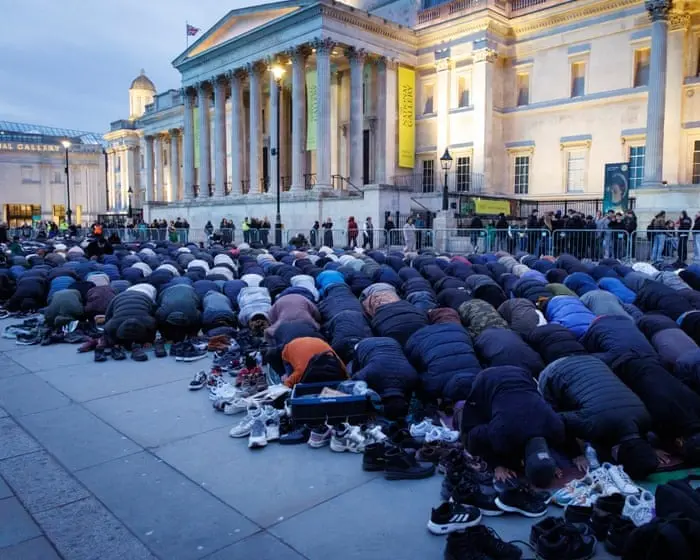
Rupert Lowe, the leader of the newly formed political party Restore Britain, has sparked intense controversy across the United Kingdom with his uncompromising statements on Islam and its place in British society. Just weeks after the party’s official registration, Lowe delivered strong remarks following a large gathering at Trafalgar Square organised in connection with Ramadan celebrations attended by London Mayor Sadiq Khan.
Lowe described the event as a clear demonstration of Islamic dominance in a historic public space and insisted that Britain must remain fundamentally a Christian nation, firmly rejecting practices he views as incompatible with British values and civilisation, including the implementation of Sharia law and halal slaughter.
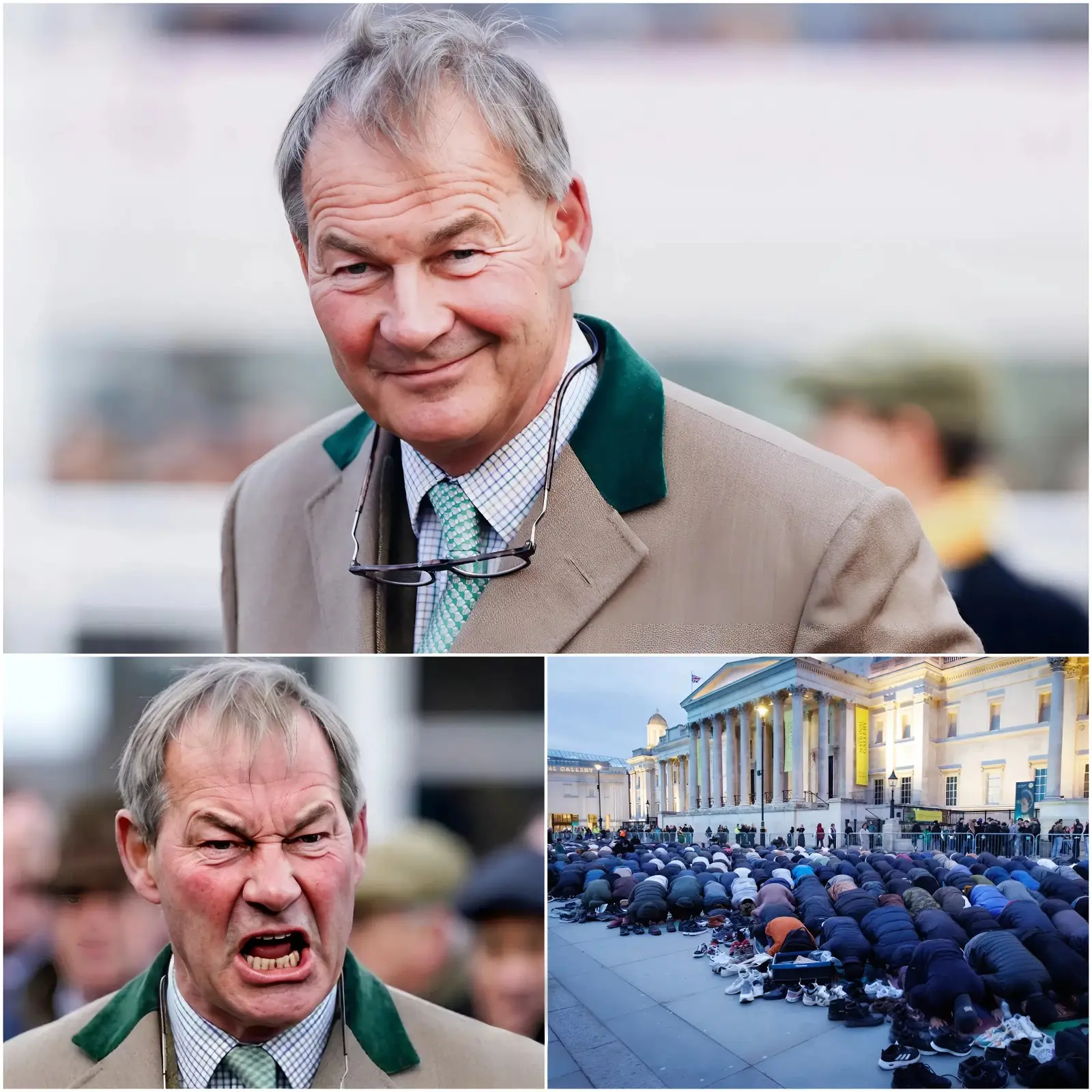
Lowe’s comments came in the wake of the high-profile iftar event in Trafalgar Square, where thousands gathered for mass prayer and to break their fast during Ramadan. He portrayed the gathering not merely as a religious observance but as an assertion of cultural and religious supremacy in the heart of London. “Britain is not an Islamic country,” Lowe declared, arguing that the nation should not be expected to change its way of life, its laws, or its traditions to accommodate customs he believes clash with core Western principles.
His position has ignited a fierce public debate, dividing opinions between those who see him as a defender of British identity and those who accuse him of inflammatory rhetoric that risks deepening social divisions.
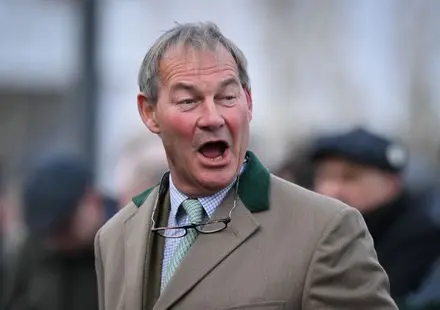
In a series of direct and unapologetic tweets and public statements, Lowe outlined Restore Britain’s stance without hesitation. He stated bluntly that his party “does not give a shit” about being labelled racist or Islamophobic for opposing what he describes as the gradual Islamisation of the country. Lowe accused mainstream political parties — including Labour, the Conservatives, and even elements within Reform UK — of failing for years to confront what he calls the Islamist threat.
According to him, successive governments have tolerated actions and ideologies that are fundamentally incompatible with British civilisation, allowing parallel societies and extremist influences to take root.
Lowe proposed a series of immediate and decisive policy measures to address these concerns. Among them are the suspension of visa routes from high-risk countries, the swift deportation of foreign nationals promoting or involved in extremist activities, and a much tougher crackdown on institutions — including mosques, schools, and community organisations — that he claims spread radical ideologies. He urged the government to act proactively before further terrorist attacks or incidents of grooming gangs occur, emphasising that waiting for tragedy to strike again is no longer acceptable.
Lowe also called for the full implementation of one law for all, rejecting any form of parallel legal systems such as Sharia councils.
Despite being active for only around 35 days at the time of his most recent statements, Restore Britain has shown rapid signs of gaining traction. Recent polling data has placed the party in a surprisingly competitive position, with some surveys indicating support levels between 7% and 10% when the option is properly prompted. The party claims over 120,000 members, positioning it as the fourth largest in terms of membership in the country, surpassing the Liberal Democrats and even challenging the Conservatives on that metric. Lowe himself has recorded high net favourability ratings in certain polls, outperforming several established party leaders.
This surge in interest reflects growing frustration among segments of the British public over issues of immigration, national security, cultural change, and the perceived failures of multiculturalism.
Supporters of Lowe argue that his hardline position resonates because it addresses real and longstanding concerns that other politicians have avoided for fear of being labelled bigoted. Many point to grooming gang scandals, instances of street grooming, no-go areas in certain cities, and the rise of Islamist extremism as evidence that a tougher approach is overdue. They praise Restore Britain for its willingness to prioritise British culture, heritage, and security above political correctness. For these voters, Lowe represents a fresh voice unafraid to defend the nation’s Christian roots and historic identity in the face of rapid demographic and cultural shifts.
Critics, however, contend that Lowe’s rhetoric is divisive and potentially dangerous. Prominent figures have pushed back against his comments, warning that framing public religious gatherings or Islamic practices as acts of “domination” could exacerbate tensions and alienate Muslim communities. Some political observers, including voices from within conservative circles, have noted the complexity of addressing sensitive topics such as grooming gangs while maintaining social cohesion. Nick Timothy, a former adviser to Theresa May, has been involved in inquiries related to grooming gangs, highlighting how these issues cut across party lines and require careful handling.
Nigel Farage and Reform UK have also commented on related matters, such as public religious observances, though their positions sometimes differ in tone from Lowe’s more confrontational style.
The debate surrounding Lowe’s statements has quickly become a flashpoint in broader discussions about national identity, integration, security, and the future of multiculturalism in Britain.
Questions abound: Should Britain assert its Christian heritage more strongly in public life? To what extent should religious practices from other faiths be accommodated in shared civic spaces? How far should the state go in confronting ideologies that challenge liberal democratic values? Lowe’s emergence as a new political force — barely a month old yet already polling competitively — suggests that a significant portion of the electorate is open to more assertive answers to these questions.
Restore Britain’s rapid rise also reflects deeper discontent with the established parties. Many voters feel that Labour has prioritised diversity narratives over community safety, while the Conservatives failed to deliver meaningful control of borders during their time in power. Even Reform UK, which positioned itself as a radical alternative, is seen by some on the right as insufficiently bold on cultural and religious issues.
Lowe’s party positions itself as the only one with the courage to draw a clear line: no parallel societies, no special exemptions, and a firm commitment to preserving Britain as a cohesive nation rooted in its historic identity.
As the controversy continues to unfold, Lowe’s remarks are likely to influence the political conversation in the months ahead, particularly as the country looks toward future elections. Whether Restore Britain can translate early polling momentum and strong online support into sustained electoral success remains to be seen. Critics argue that its approach risks inflaming community relations and playing into narratives of exclusion. Supporters counter that ignoring uncomfortable truths has already caused significant damage and that honest debate is essential for the country’s long-term stability.
In an era where issues of religion, immigration, and identity dominate headlines, Rupert Lowe has thrust himself and his fledgling party into the centre of the storm. His refusal to soften his language or apologise for defending what he sees as Britain’s core character has won him both fierce loyalty and sharp condemnation. The coming weeks and months will test whether this bold stance can reshape the political landscape or whether it will ultimately deepen the very divisions he claims to be fighting against.
For now, one thing is clear: the debate over Islam’s role in the United Kingdom has been reignited with new intensity, and Rupert Lowe’s Restore Britain intends to keep it burning.