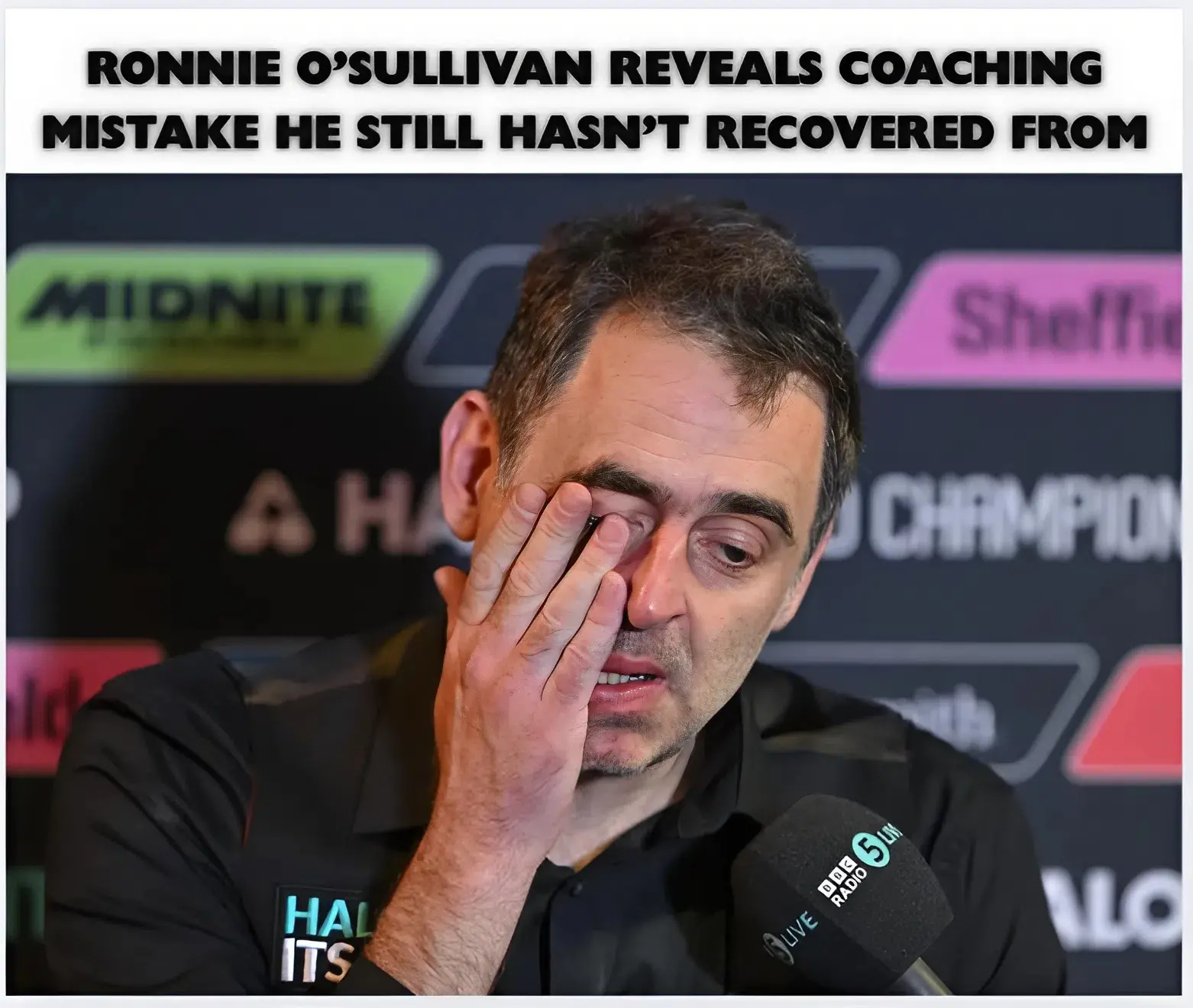
Ronnie O’Sullivan, widely regarded as one of the greatest snooker players of all time, has made a startling admission about a decision that continues to haunt his game more than six years later. The seven-time World Champion has described listening to “bad coaching advice” as the single worst mistake of his illustrious career, claiming it fundamentally damaged his technique and left him fighting to rediscover his natural rhythm on the table.
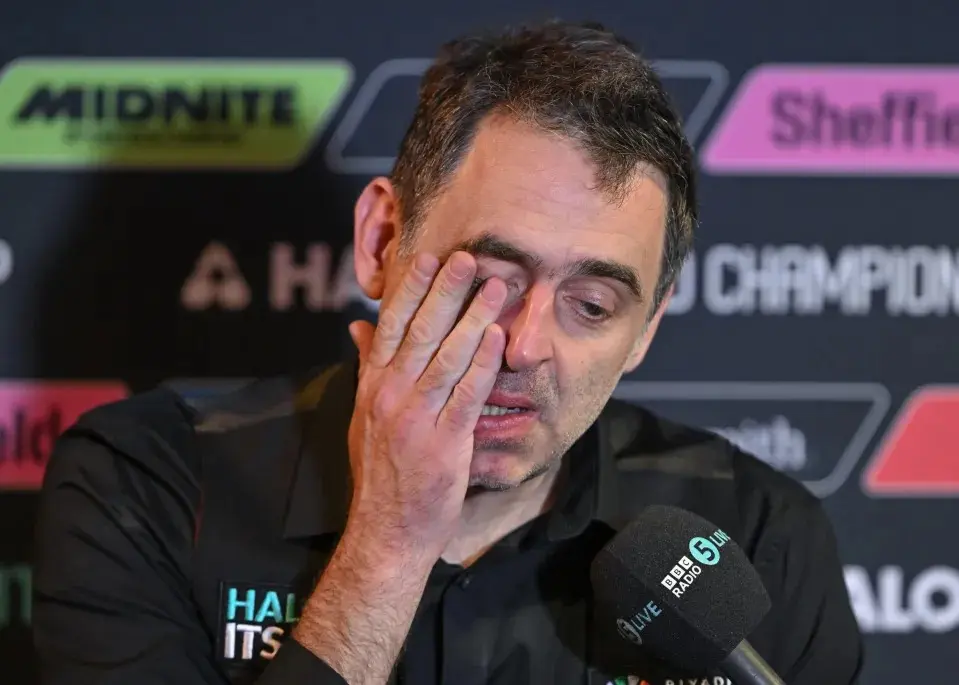
Now 49 (turning 50 during the 2025/26 season), O’Sullivan opened up in a candid interview with *SunSport* and later reinforced his comments during the World Snooker Championship. He revealed that sessions with an unnamed coach led him to alter his core fundamentals — specifically his alignment, timing, and connection with the cue. What began as an attempt to improve has instead become a persistent technical nightmare that he says “set the rot in.”
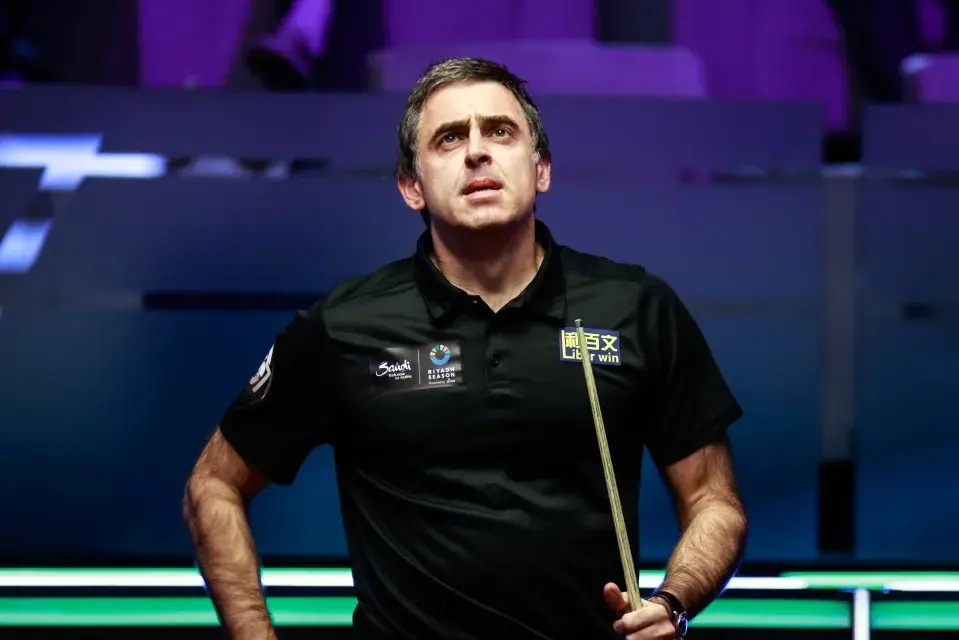
“I’ve changed my alignment, lost my timing, and basically lost all connection with the cue,” O’Sullivan explained. “It’s the worst thing I’ve ever done in snooker — and I’ve done some bad things in snooker before.”
The Rocket’s honesty shines a light on the hidden struggles behind his continued success. Despite winning the World Championship in 2020 and 2022, and remaining a top contender, O’Sullivan insists he has been battling these self-inflicted issues for years. He compared the difficulty of reversing the changes to trying to alter someone’s natural walking style after decades of habit.
“It takes time, it takes perseverance. It takes a lot of discipline,” he said. “I got messed up by a coach and it’s just about trying to unravel it. I’m not sure I can. It’s really difficult… It’s horrible, to be honest with you. Even when you’re playing alright, it feels horrible.”
O’Sullivan has been vocal about refusing to name the coach involved, emphasizing fairness. “I don’t think it’s fair to say who it is,” he stated firmly. His reluctance underscores a professional code, even as he grapples with the long-term consequences of that advice. He has since vowed never to seek external coaching again when it comes to the mechanics of striking the ball, preferring to trust his instincts and self-coach his way back to form.
The moment of realization hit hard during the 2023 World Snooker Championship. As the defending champion, O’Sullivan suffered a heavy quarter-final defeat to Belgium’s Luca Brecel. That loss, he says, exposed the full extent of the damage. “Since Luca gave me a good hiding here it’s just been awful really,” O’Sullivan recalled. Attempts to “play his way out of it” failed, forcing him to confront that the technical changes were not temporary glitches but deep-rooted problems.
Heading into subsequent matches, including clashes against players like Si Jiahui, O’Sullivan openly acknowledged the need for major improvement — particularly in potting long balls and controlling the cue ball more effectively by pinning opponents to the back rail. His frustration has been visible at times, with the usually unflappable Rocket admitting to feeling unconfident and even “horrible” at the table.
This revelation adds a compelling layer to O’Sullivan’s late-career narrative. Known for his flamboyant style, unmatched talent, and occasional controversies, the Rocket has always marched to his own beat. His decision to experiment with coaching advice — something many players do routinely in search of marginal gains — backfired spectacularly for a player whose natural genius has long set him apart. At an age when most professionals begin to wind down, O’Sullivan is instead engaged in one of the most challenging projects of his career: rebuilding from within.
Fans and pundits have reacted with a mix of surprise and admiration. Many point out that despite the self-diagnosed issues, O’Sullivan remains competitive at the highest level, a testament to his sheer ability and mental resilience. Others see it as further proof of his relentless pursuit of perfection — a drive that has produced 40+ ranking titles and multiple records but has also led to this very public moment of vulnerability.
O’Sullivan’s situation raises broader questions about coaching in snooker. While modern sports science and technical analysis have helped many players refine their games, the sport’s individual nature means that not every piece of advice suits every player. What works for one can disrupt the intuitive flow of another, especially someone like O’Sullivan whose game has always been more art than science.
As he continues his quest to “re-coach” himself and return to his natural instinct, the snooker world watches with fascination. Will the Rocket fully unravel the knot he tied years ago? Or will this technical battle become the defining challenge of his twilight years?
One thing is certain: even in admitting what he calls his greatest mistake, Ronnie O’Sullivan demonstrates the same honesty and fearlessness that have made him a legend. In a sport that demands precision, focus, and unyielding self-belief, his willingness to confront and publicly discuss his struggles only adds to his enduring appeal.
Whether he regains complete harmony with his cue or not, O’Sullivan’s journey serves as a powerful reminder that even the greatest athletes face internal battles — and that true champions are those who keep fighting to overcome them, one frame at a time.